🐌 Learning to Live Slowly
Six years after getting COVID, I’m still working out what my life looks like with the strange, shifting limits of chronic illness.
This week, I let go of the last small thread of work I’d been holding onto with Revolution in the 21st Century. A few hours here and there — just enough to feel like I was still the person I used to be. Still contributing. Still part of something I’d spent years building.
But my brain has shut down to that kind of work now. So I wrote a gentle goodbye email to the team, and a farewell on social media. I’m hoping that by shrinking my world — and my worries — I might give my body the space it needs to recover.
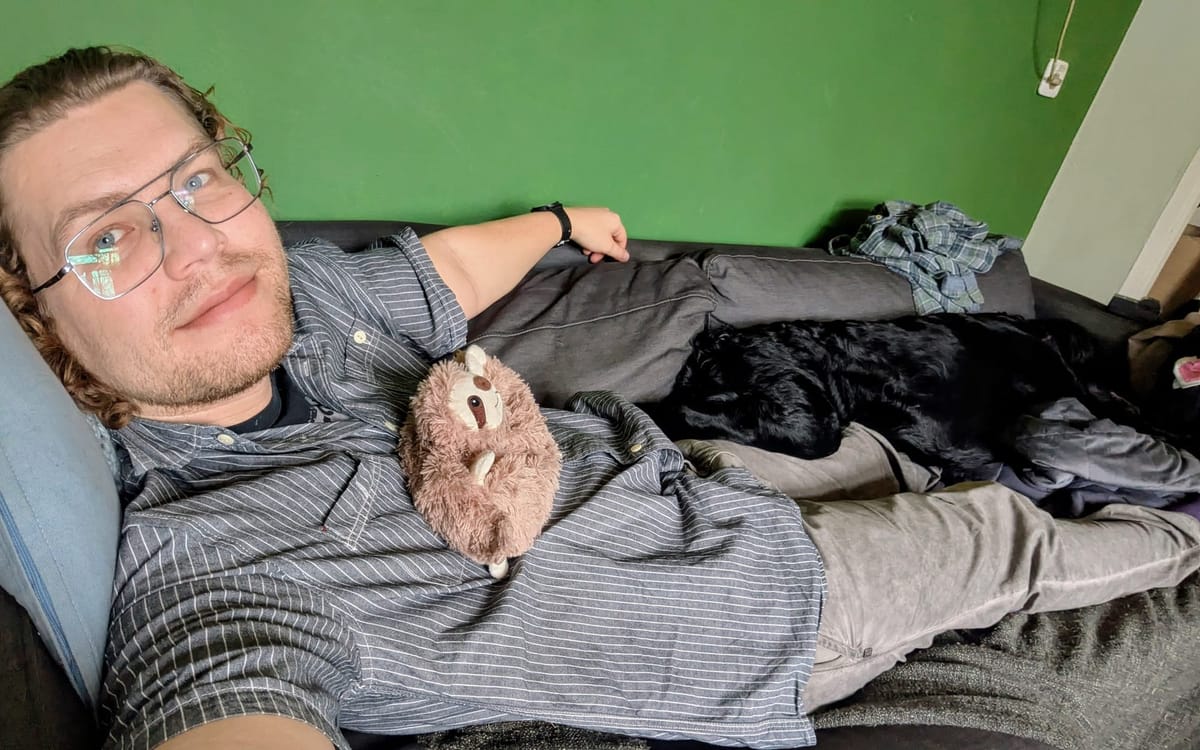
Now I’m lying down with a migraine, dictating these thoughts into my phone. Speaking, in a strange way, both into the void and into the world’s largest language machine.
Chronic illness takes things from you slowly, and then sometimes all at once. Work — that identity of doing and producing — was one of the last things I was still quietly clutching. Letting it go feels significant. Not just practical, but existential.
Who am I, if not someone who does? What do I do when I see climate collapse unfolding across our gorgeous blue-green earth, yet live bound by these four walls?
I’m still working that out. My values are the same. My love and motivation undimmed. Yet physically, I can give a lot less. So meaning has gotten smaller. More specific.
I’ve started sewing again — patches, small art projects, techniques I haven’t touched since school. I bake for my housemates and neighbours. I keep the common spaces clean because I’ve noticed how much it changes the feeling of coming home to something cared for.
It’s not the life I imagined for my twenties. It looks, in some ways, closer to that of a retiree. But there’s an honest craft in it. A kind of housebound purposefulness — stripped of the stereotype associations of age or gender. Just a person who happens to be home a lot, trying to make that mean something for the people around them.
I hold it lightly. Some days it feels like a silver lining. Other days, it just feels like what’s left.
The hardest part, most days, isn’t the physical limitation. It’s the relational cost.
Illness makes you unpredictable. Unavailable. Hard to reach.
People you love have their own rhythms — their own crises, their own windows of openness. And when your body doesn’t run on a schedule, you miss each other. You fall out of sync.
So you find other ways.
Letters. Voice notes. Small things made with care. Slower, more asynchronous forms of love.
It’s an adjustment. And it’s ongoing.
Not everyone understands. Some are drifting away. That's okay. I'm taking it one day at a time.
I’m still doing EMDR therapy. Still trying to bring my nervous system somewhere closer to rest — films, audiobooks, sitting in the garden, whatever works on a given day. Still watching for those small windows of recovery, and trying not to measure my life only by their absence.
Six years in, I’m not the person I was before.
But I’m still here. Still finding small ways to nourish the life I actually have. Still trying to keep despair at a distance with purpose, however quiet.
That feels like enough, for now.